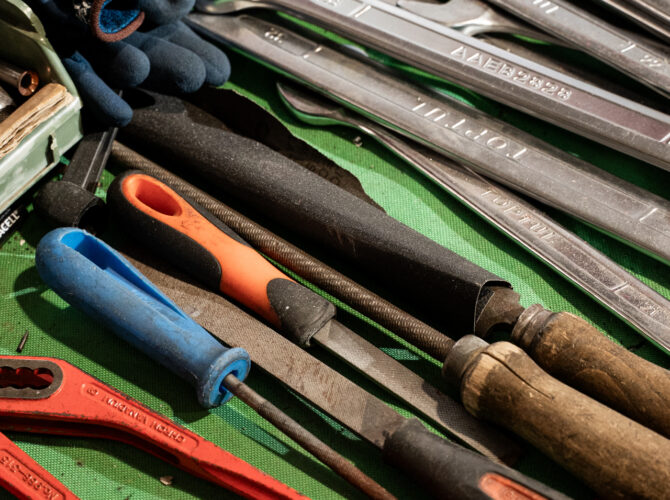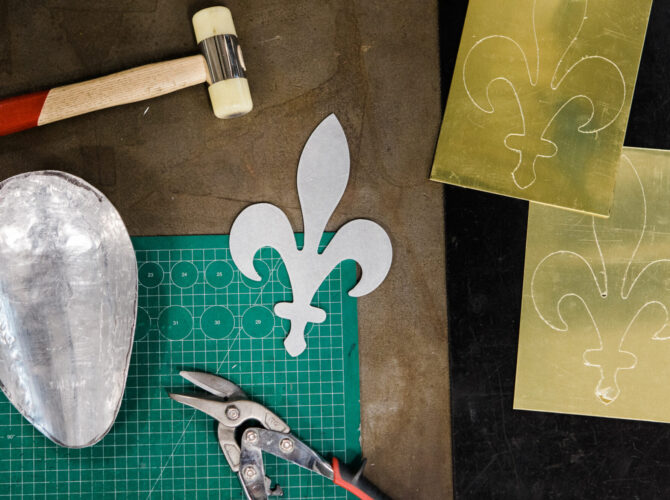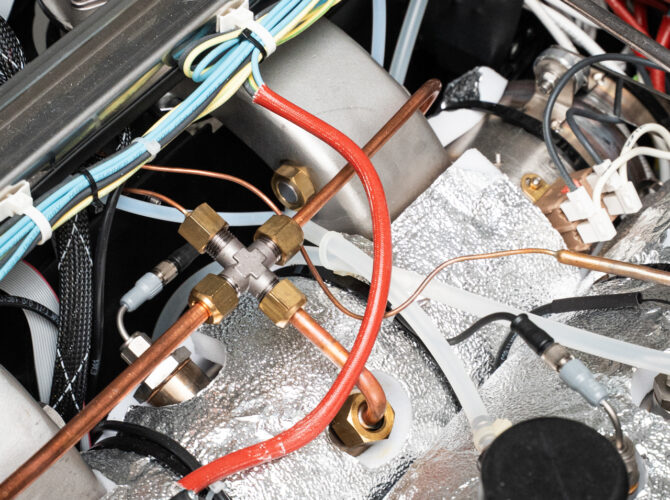
Essence of Craft is a journey into the making of La Marzocco, a visual and narrative exploration of the craft of our espresso machines, the precision, and the human presence behind each step.
Balanced Design, the second capsule in the series, explores precision, mechanical harmony, and the human calibration behind perfection. The quiet tension between engineering and art.
Balance at La Marzocco is not just technical, it’s human precision made visible. Every calibrated part, from burr alignment to frame assembly, reflects the pursuit of perfect harmony between design, mechanics, and touch.
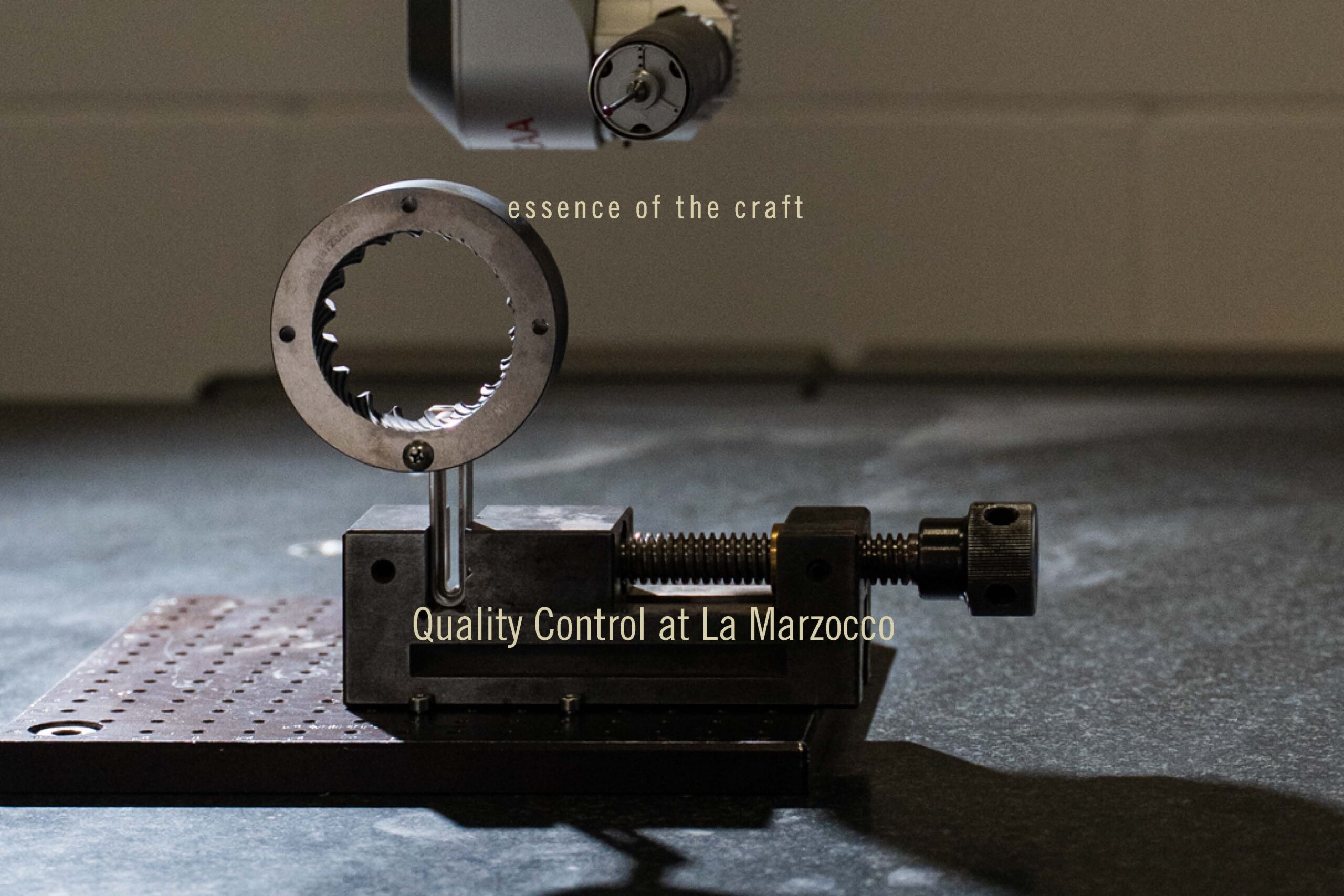
Quality Control at La Marzocco

La Marzocco’s rapid production growth in recent years has required increased focus on materials, procedures, and training to maintain high-quality standards. Quality control has become even more critical with the introduction of complex projects that demand structured processes, advanced skills, and strong organization.
The quality control department now consists of 16 specialists focused on product quality and 2 on system quality. The team collaborates closely with other departments across the company.
Operationally, a dedicated metrology room was established to enable highly accurate inspections. This temperature-controlled environment allows for precise dimensional measurements of both mechanical and aesthetic components. Equipped stations use specialized surfaces to perform measurements, dimensional checks, and assessments of flatness, orthogonality, and concentricity. These processes ensure that supplier-produced parts meet the tolerances specified in technical drawings.
Key quality control tools include an optical measuring machine and a coordinate measuring machine, both of which use probes and cameras. These instruments enable automated, high-precision measurements.
Quality control covers not only component dimensions but also material properties such as chemical composition, hardness, and both functional and aesthetic characteristics.
Investing in advanced instruments has required expanding the team and enhancing their skills. Several members are now certified to perform non-destructive testing, including penetrant testing and visual inspection, which verify material integrity and quality without causing damage. As a result, many inspections that once required external laboratories can now be performed internally.

Today, quality control operates in three main areas: System Quality, Supplier Quality, and Internal Quality.
System Quality
Focuses on ensuring the company maintains required certifications and drives continuous improvement through regular internal and external audits. This area provides the framework for consistent quality standards across the organization.
Supplier Quality
Oversees all incoming components and monitors supplier performance, recognizing that quality begins before manufacturing starts.
Internal Quality
Manages the production floor by inspecting incoming parts, identifying defects during assembly, and conducting final tests on completed machines and grinders before shipment.

To maintain low defect rates as production increases, every detail is carefully managed. Incoming materials are processed to prevent production delays due to nonconforming parts. After improving component quality, the team began working directly with suppliers, integrating La Marzocco’s quality requirements into their production processes. These requirements are documented and shared with suppliers, who implement procedures and controls to ensure compliant deliveries.
Despite supplier guarantees, La Marzocco continues to inspect incoming components critical to product performance. For example, last year, 285,000 parts were inspected, representing 15% of received batches.
Even with all these precautions, occasional issues may arise. The production floor quality team works alongside assembly teams to identify and resolve problems in real time. Their focus on root cause analysis ensures that underlying issues are addressed and recurrence is prevented on the assembly line. Every espresso machine and grinder is tested before packaging, but La Marzocco goes a step further with a random bench test — pulling already-packaged units ready for shipment and running them through the testing process again. And once products reach La Marzocco’s branches in Australia, the U.S., and New Zealand, another check is performed to confirm nothing was damaged during the long journey.
Quality monitoring continues after delivery. The after-sales team tracks any issues that arise once machines or grinders are in use, whether in cafes, restaurants, or homes. These findings are shared with the quality and Research and Development teams, providing real-world data for ongoing product improvement.
This attention to detail, from raw components to machines in the field, demonstrates a commitment to quality based on measurable data. Connectivity and data collection are increasingly important. The quality department establishes Key Performance Indicators (KPIs), which are specific, trackable metrics used to assess process effectiveness and progress toward company goals.
Ultimately, all of these efforts support a single goal: ensuring that every coffee lover, anywhere in the world, can enjoy excellent espresso from a reliable machine, cup after cup.
Follow the journey of #essenceofthecraft on @lamarzocco